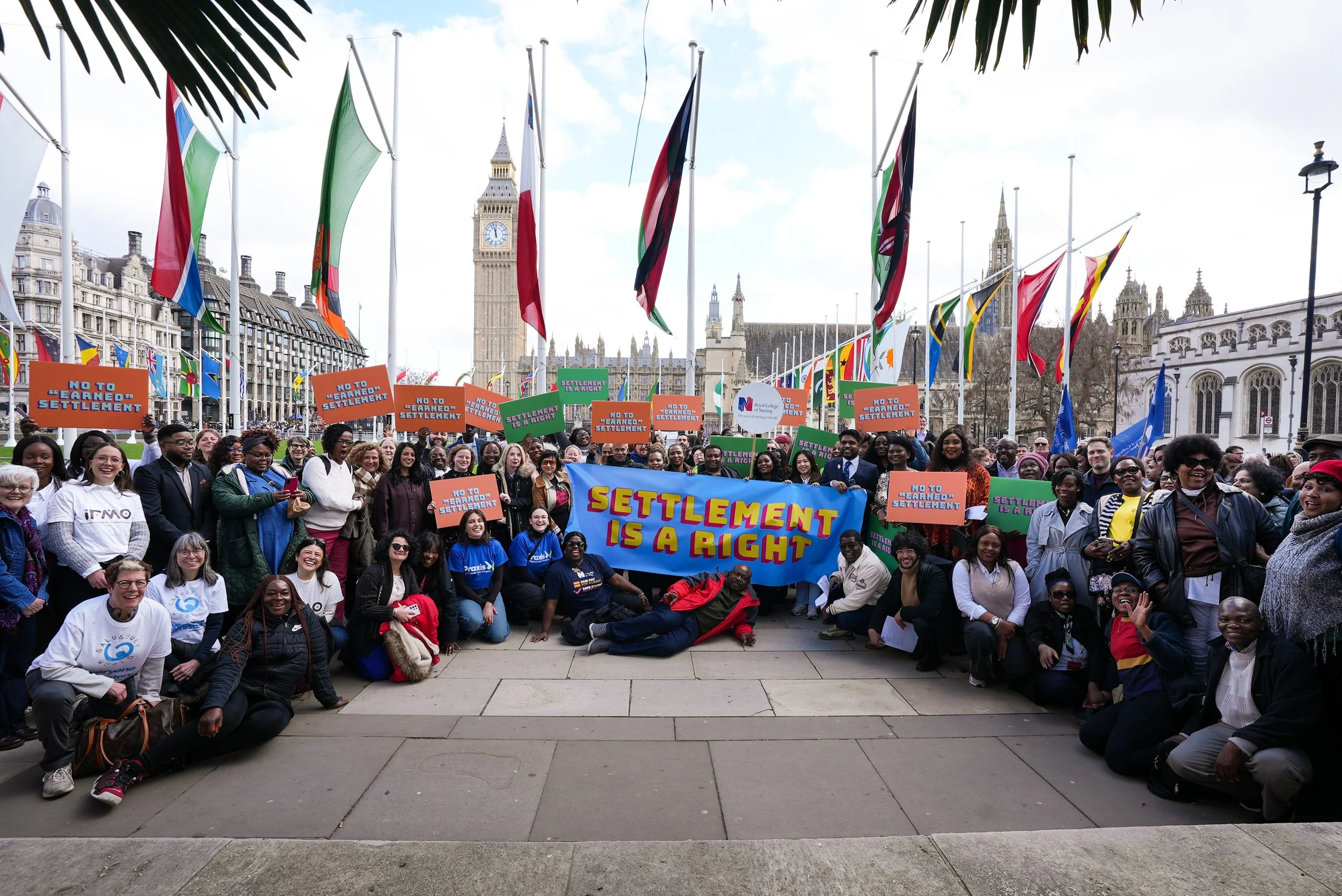
In the middle of one of the most hostile political moments for migrants in recent memory, organisers from across the UK came together to create something bigger than any one organisation. On the 11th March 2026, more than 500 people took part in a mass lobby in Parliament on the Government’s earned settlement proposals speaking to around 100 MPs. Ella, Campaigns Coordinator at Praxis, reflects on how we did it and what we’ve learnt.
The mass lobby was coordinated by the No Recourse to Public Funds Partnership, a partnership between Praxis, Citizens UK and Migration Exchange. However, we knew from the outset we wanted this lobby to be bigger than us.
At every stage, organisations and communities chose to work together rather than compete for ownership. We shared skills, relationships and resources.
This was never just our lobby
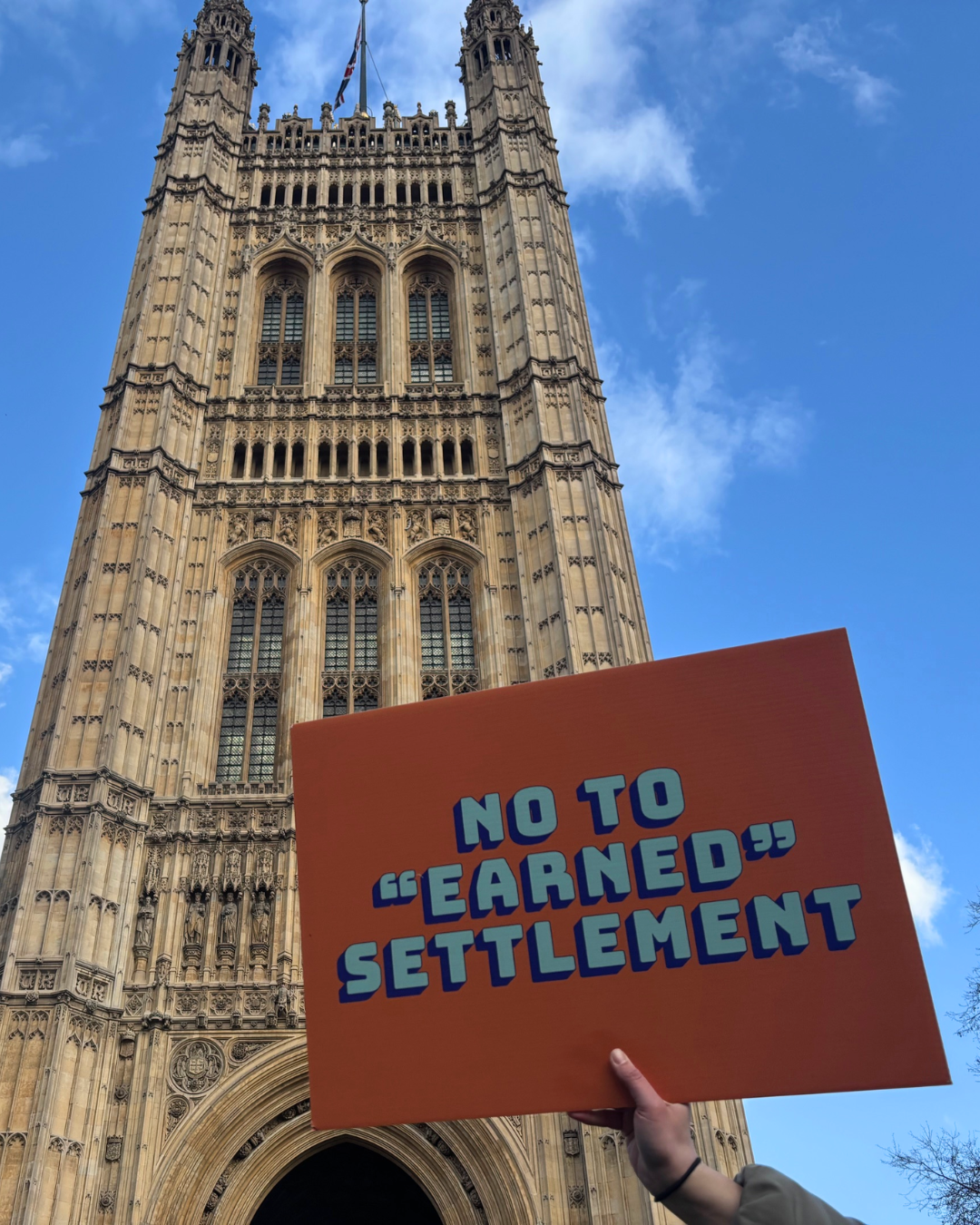
When we started planning a mass lobby against the proposed changes to settlement rules, including extending routes from five years to ten (reaching up to 30 years) and introducing punitive conditions linked to accessing social security, we knew working with communities across sectors would be the way to get attention from the media and politicians.
We didn't invent this model. We learned from people who had already done it. We spoke to climate organisations, trade unions, disability rights campaigners and others who had organised large-scale mobilisations before us. We asked questions and listened.
One of the clearest examples was learning from Disabled People Against Cuts (DPAC), who organised a major mass lobby around Universal Credit and PIP. One of the biggest challenges they faced was parliamentary security systems that weren't accessible. Wheelchair users were blocked, people were given conflicting information, and the experience was unnecessarily stressful.
What stood out wasn't just that they organised the lobby. They pushed Parliament to change the process itself and because of that work, security briefings for our lobby were clearer, systems were smoother and expectations were better managed. This felt like solidarity in practice; one movement making the ground a little easier for the next.
We built tools, not scripts
From the start, we wanted to take a decentralised organising approach. Our role was to make mobilisation possible but not control it. We created safety briefings, political briefings, meeting guides and write-to-your-MP tools and we designed them to be adapted so that organisations could add their own asks. Communities could shape their own narratives and groups could decide for themselves how they wanted to mobilise.
We also know that not every organisation can afford campaigning platforms and digital tools, so wherever possible we used Praxis’ infrastructure to host shared actions and remove financial barriers. The aim was giving people what they needed to take part.
Working across sectors made us stronger
If this had remained solely within migrant rights spaces, it would still have been powerful, but it would have reached fewer people. Instead, housing justice groups, disability rights organisations (DBC, Inclusion London, DPAC, DAMN), children's charities, mental health campaigners (NSUN), NHS workers, care workers and trade unions (Unite, UNISON) stood alongside migrant communities.
One example of this cross-sector collaboration was our work with health justice charity MedAct and the Royal College of Nursing on the huge impact of the earned settlement changes on the NHS. This kind of joint working gave us greater-cut through in the media and the story was featured on the front-page in The Guardian.
Over several months we had hundreds of conversations, calls and meetings with different organisations and sectors. As word spread, more groups got involved in the lobby. We connected with self-organised migrant networks that had emerged in response to the earned settlement policy announcement, representing thousands of people suddenly facing uncertainty about their futures.
The systems that harm migrants are the same systems that harm disabled people, working-class communities, and black and brown people. People came together across sectors for the lobby not because every issue is identical, but because our struggles are shared.
Recognising the climate of anxiety
The lobby took place in a climate of real anxiety for migrants and refugees. The government was once again moving the goalposts on settlement. Families who believed they were finally approaching stability were being told they could face another decade, or even decades, of uncertainty. Parents were worried about what this means for their children, unsure what the future now holds.
I've seen this first-hand through working with the No Recourse to Public Funds Action (NRPF) Action Group at Praxis, a group of migrants who have been campaigning for years for shorter, more affordable routes to settlement and against punitive policies like NRPF. In the lead-up to the lobby, we spent time at Praxis understanding what these proposals could mean for their lives and what they could do to change it.
Patricia, a campaigner at Praxis:
“I came to the UK believing that if you worked hard and followed the rules, you could build a stable life. My child has complex needs and I claimed the benefits I was legally entitled to so I could care for him properly. Now I’m being told that because I needed that support, my path to settlement could stretch to 20 years.
We already pay thousands in visa fees every few years, and living with this constant uncertainty makes it impossible to plan for the future. It makes you feel like you don’t really belong - even though my children were born here and this is the only home they know. Families like mine are simply trying to care for our children, but these changes are pushing more of them into poverty.”
Joy in the face of fear
On the day of the lobby, groups from across the UK and across sectors came together to raise their voices. Groups with lived experience of the immigration system, including campaigners from Greater Manchester Immigration Aid Unit (GMIAU), travelled to Westminster together.
We all met in the Methodist Central Lobby, a large space just a short walk from Parliament. We started the day with speeches from organisers and MPs including Oliva Blake MP and Hannah Spencer MP. The room was packed and the energy was incredible.
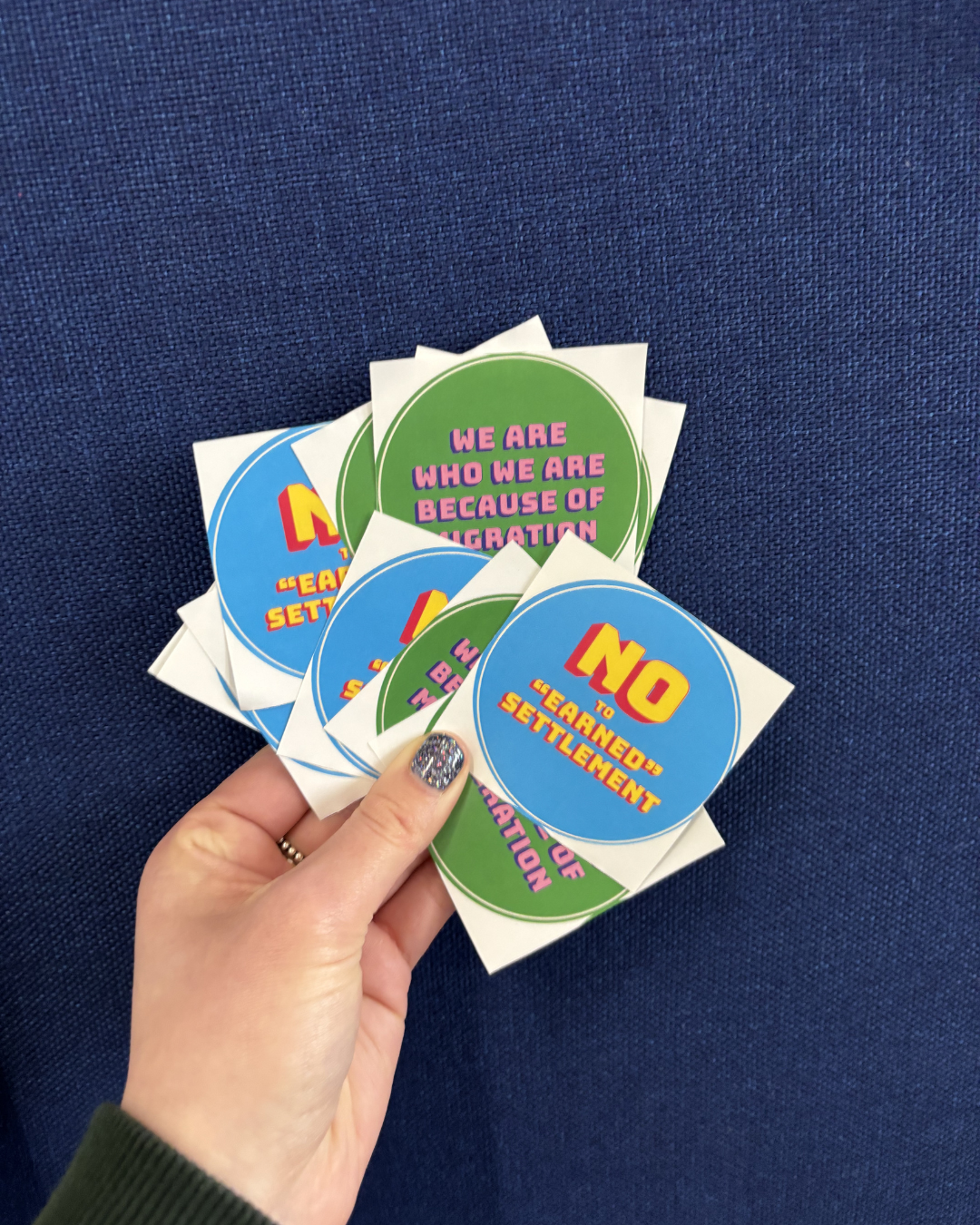
Having this additional space meant that people could prepare together before their meetings, rest between activities, and connect with others taking part. We provided food, prayer space, iftar packs, posters, stickers and activities for families. For those unable to attend in person, we created a range of online actions for people to take to show their support from home.
Volunteers led groups to Parliament throughout the afternoon, staggering arrivals and staying in constant communication about capacity and queues inside Parliament.
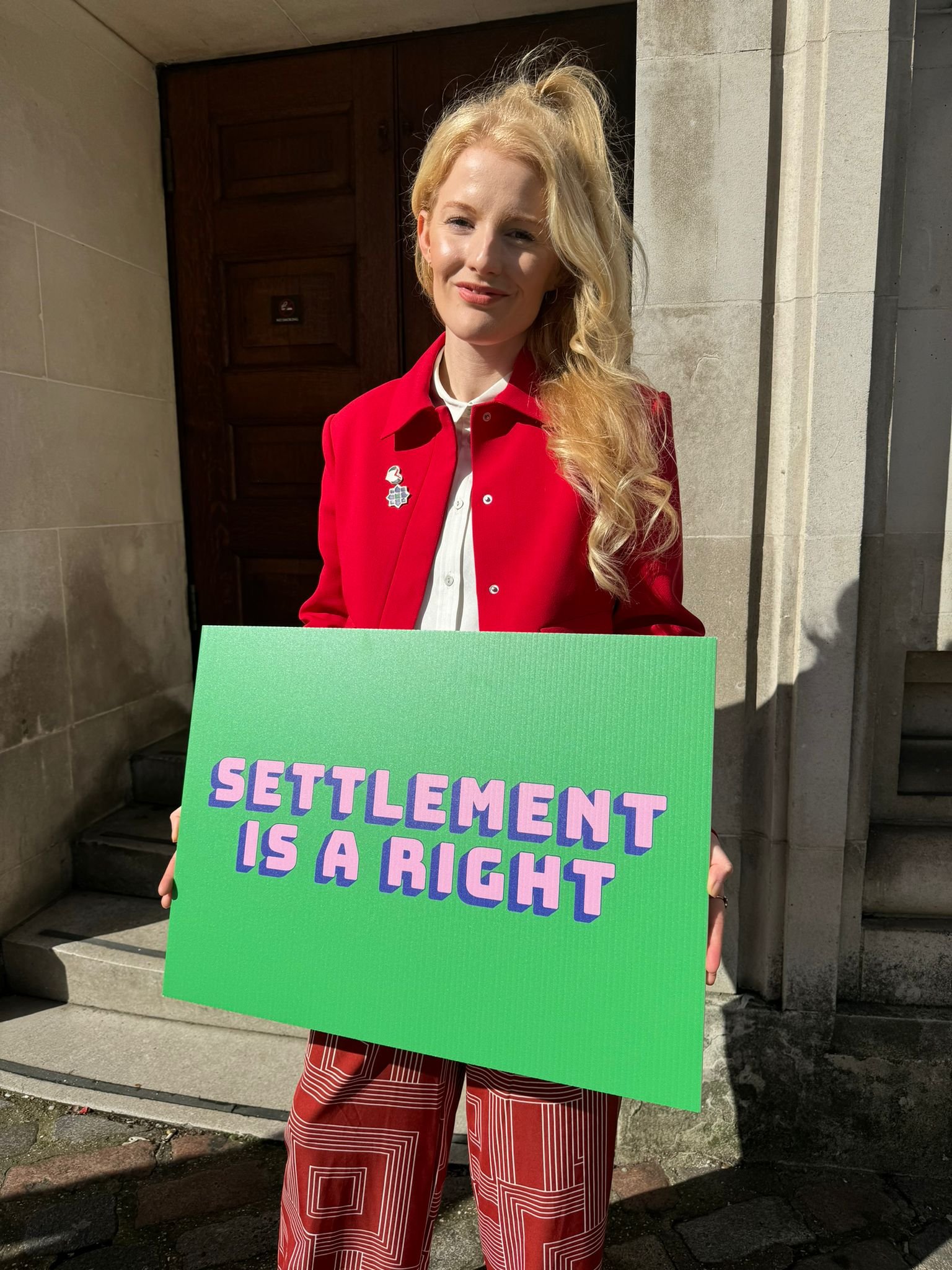
People attending their first ever MP meeting stood alongside seasoned campaigners. After meetings, people gathered to compare notes, celebrate wins and support each other. The lobby gave people impacted by the changes the opportunity to come together and act alongside hundreds of others.
When a system is designed to make you feel powerless and isolated, these moments are invaluable. It was one of the most energising organising spaces I've been part of.
What we're taking forward
This lobby wasn't an endpoint. It was a reminder of what becomes possible when organisations share resources, communities shape their own participation and movements learn from one another. We learned that people are more likely to take action when they feel ownership over it.
We learned that sharing tools can be more effective than trying to control every part of a campaign. We learned that the knowledge built in one movement can strengthen another. And we were reminded that even in difficult political moments, organising can create spaces that are hopeful, welcoming and full of energy.
Intense public pressure and widespread opposition from Labour MPs has forced the Government to delay its earned settlement proposals until the autumn. This is a significant setback for plans that would make it harder for people to secure permanent status and build their lives in the UK.
But the fight is far from over. We will continue organising, campaigning and building pressure until these proposals are scrapped in full.
16th June 2026